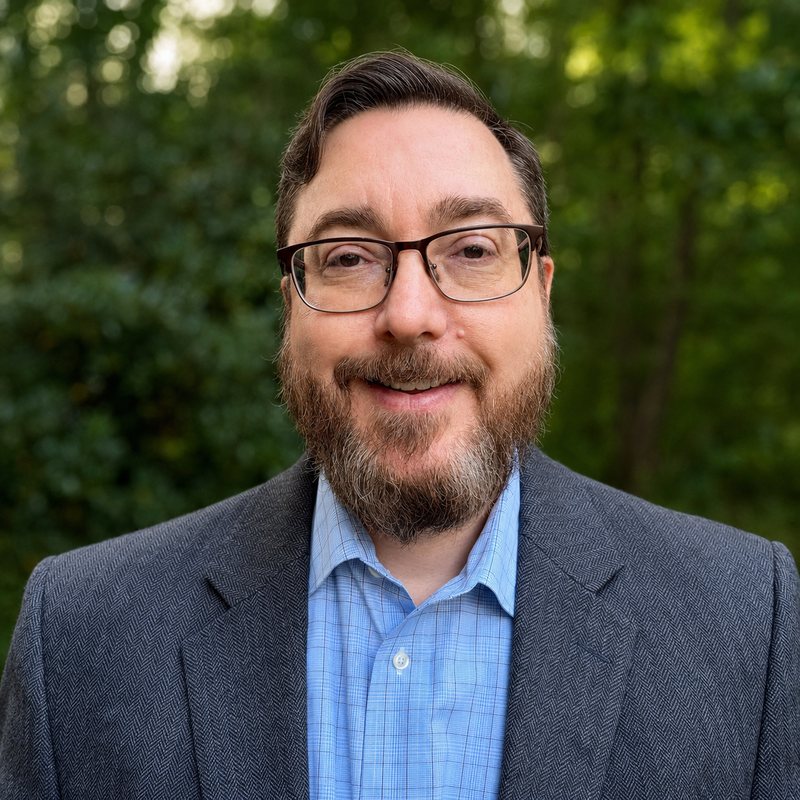
Tom Elrod

CTO | Scaling Software and AI-Native Platforms Beyond Product-Market Fit

I have owned the whole CTO seat: the budget, the vendor contracts, the customer commitments, and the people decisions. I stay technical enough to know whether the engineering is actually working.

Tom Elrod

Profile

Two CTO tenures totaling about eleven years, plus six years running engineering for a venture-backed healthcare platform. I have raised a venture round and recruited the CEO who ran the company, run the technical due diligence for a Series A, and written and closed customer-facing commercial paper at both a services business and a product business.

Most of what goes wrong in a growth-stage engineering organization is a decision made two levels down that nobody senior sees until it is expensive. I build the leadership layers and technical governance that surface those decisions early, without routing them through me, and I stay technical enough to know whether the organization is executing correctly.

My focus is the engineering operating model and architectural foundation that let a company grow without breaking. The role I play best is inside a company with a real product, real customers, and real momentum, where the business cannot pause while the platform matures.

The whole CTO seat

The money

Engineering payroll, cloud spend, and vendor contracts are decisions, not line items. Spending well sometimes means cutting a monitoring contract by roughly 70 percent after pricing the vendor’s proposal against actual usage. Sometimes it means killing a cost-reduction project because building it would cost more than it saves.

The customer commitments

I have held master agreements and statements of work as the named responsible vendor contact, and I have turned a customer’s feature request into a priced, signed statement of work. Engineering that can do that stops being a cost center in the customer conversation.

The capital conversation

I have pitched more than ten venture firms and closed a round. I have sat across the table from an institutional investor’s technical diligence team and decided which of their recommendations to execute and which to decline.

The organization

I build the management layer, the ownership model, and the technical governance that let decisions get made well without me in the room. Consequential decisions surface early, and ownership stays with the leaders closest to the work.

Close enough to the work to know

Delivery and architecture

I build release management, staged deployment, and architecture governance end to end, and I direct the platform work underneath them: multi-tenant modernization and a move to schema-per-organization tenancy across 10+ services.

AI with governance written first

I wrote the AI governance policy before AI touched the merge path: approved tools, a four-tier data classification, and no autonomous production deploys or AI self-approval. Then AI code review became a required merge gate. When we built AI triage bots, the environment and volume gates went in front of the model call, so noise is filtered before it costs anything and the tickets that come out are ones people trust.

Judgment calls that mattered

Verusen

Faster onboarding without a rebuild

The expensive way to shorten customer onboarding is to rebuild the product it runs through. I took the other route: internal tooling that automated the onboarding path, plus changes to the process around it.

Onboarding time dropped by roughly 90 percent. Time from signed contract to customer value is a commercial number, not an engineering one.

Verusen

AI adoption that people can trust

Policy first, then tooling. The governance policy set the boundaries. AI code review became a required merge gate, which let us cut required human reviewers from two to one.

The triage bots now file security and error tickets at roughly 300 a year, gated so they only file what matters. Once they were working, I handed the evaluation policy and the QA tooling to named owners on the team.

Gozio Health

Knowing which diligence recommendations to decline

I ran the company’s technical due diligence for its Series A with Morgan Stanley Expansion Capital. The assessment identified no significant threats.

The more useful part was what came after. We executed most of the recommendations: split services out, embedded QA, raised test coverage. I declined three on my own judgment. One was a standard best practice to drop older app versions. Our usage data showed the users on those versions were patients on old phones, not developers. We kept supporting them.

Gozio Health

A feature request that paid for three engineers

In my first six weeks, a major health system asked for a feature. I proposed the approach, wrote and priced the statement of work, and closed it with the customer. We delivered on time and on budget.

The work funded three additional engineers and became a native product capability sold to the rest of the customer base.

Gozio Health

Forty-five days, two engineers, one regulatory change

A federal regulatory change exposed every healthcare customer on the platform, and the incumbent vendor would not sign a business associate agreement. Working with outside counsel, we shipped a replacement in 45 days with two engineers.

The company notified its customers before most of them knew the directive existed.

Selected roles

Jul 2024 – Present

VP of Engineering (May 2025 – Present) · Distinguished Architect (Jul 2024 – May 2025)

Lead the roughly 30-person engineering organization behind an AI-driven supply chain platform serving enterprise customers. Operated as co-VP of Engineering from hire and assumed the title on the incumbent’s departure.

Delivered ten major releases on schedule in 2025. Directed modernization of a multi-tenant platform managing 14M+ parts and materials. Reduced cloud spend by about 40 percent and held it there as platform data volume grew. Cut customer onboarding by roughly 90 percent. Drove SOC 2 Type II compliance.

Feb 2018 – Jul 2024

VP of Engineering

Owned engineering and seven product surfaces for a healthcare mobile experience platform deployed across health systems nationwide. Grew engineering from 3 to 24, built the management layer above it, and launched three product lines with three different sourcing decisions.

Platform reached over 350 million mobile interactions and nearly 1.5 million app installs. Compliance: HIPAA and ISO 27001.

2012 – 2018

Chief Technology Officer

First employee of a technology consultancy delivering software, mobile, and integration platforms. Built the agency from the ground up with the CEO and Chief Innovation Officer, growing it to serve Fortune 500 accounts. Held master agreements and statements of work with enterprise clients as the named responsible vendor contact.

2007 – 2012

Co-Founder & Chief Technology Officer

Sold the product with my co-founder before we had a sales team, reaching 12 customers and $360K ARR in year one and approximately $1M ARR by 2012. Pitched more than ten venture firms and closed a $1.4M round led by True Ventures.

Recruited the CEO who ran the company, a former customer of the product. Architected a multi-tenant SOA platform processing 100M+ marketing events per month.

2003 – 2007

Principal Software Engineer

Founder and lead architect of JBoss Remoting, adopted across multiple middleware subsystems. Expert member, Java Community Process (JSR-160, JSR-255). U.S. lead for J2EE certification initiatives. Named inventor, SSL socket builder (US 2009/0064208, Red Hat).

How I think about the job

Growth-stage companies need clarity above everything else. Clear ownership. Clear architectural direction. Clear execution frameworks that let teams move faster without increasing fragility.

The best CTOs at this stage are not the hero engineer, the pseudo-CPO, or the loudest person in the room. They are not the executive too far from the work to know whether it is being done well, either. They build the systems, organizational and technical, that let a company keep growing without engineering becoming the bottleneck.

I apply the same discipline to sourcing. A commodity capability is not core, and someone else can build it. The thing you have spent years getting right stays in-house.

Modernization cannot pause the business. The company still has to sell, deliver, and support customers while engineering changes underneath it.

Writing

I contribute to agentic-sdlc.org, an open playbook documenting one engineering organization’s move to an agentic software development lifecycle.

Let’s talk

I’m glad to talk with CEOs, board members, and investors about what it takes to scale engineering after product-market fit.